
What Is the Difference Between Indoor and Outdoor Rugs?
Rugs play a far more complex role in interior design than simply covering a floor. They anchor furniture, control acoustics, add warmth, and communicate the personality of a space. Yet one of the most common design mistakes is choosing a rug based purely on appearance without considering where and how it will be used. Indoor and outdoor rugs may look similar at first glance, but they are engineered for very different environments, and using the wrong type can shorten a rug’s life dramatically.
The distinction between indoor and outdoor rugs is not a marketing trick; it is rooted in material science, construction methods, and performance requirements. Moisture exposure, foot traffic, sunlight, and cleaning routines all affect how a rug behaves over time. Understanding these differences allows homeowners and designers to make smarter choices that balance aesthetics, durability, and maintenance. Whether you are furnishing a living room, balcony, dining area, or open-plan space that blends indoors and out, knowing what separates these two categories is essential.
Materials and Construction: Designed for Different Environments
The most fundamental difference between indoor and outdoor rugs lies in the materials used to make them. Indoor rugs are commonly crafted from natural fibers such as wool, cotton, silk, or jute, as well as softer synthetics designed to mimic these textures. These materials prioritize comfort underfoot, rich texture, and visual depth, but they are sensitive to moisture, prolonged sunlight, and heavy soiling. Their construction often involves tighter weaves or higher piles that enhance softness but can trap dust and stains.
Outdoor rugs, by contrast, are engineered for exposure. They are typically made from synthetic fibers like polypropylene, polyester, or recycled plastics that resist water absorption and dry quickly. These fibers are less likely to fade under UV light and are inherently resistant to mold and mildew. The weave is usually flatter and more open, allowing water and debris to pass through rather than settle deep within the rug. This structural difference is what enables outdoor rugs to survive rain, humidity, and temperature changes.
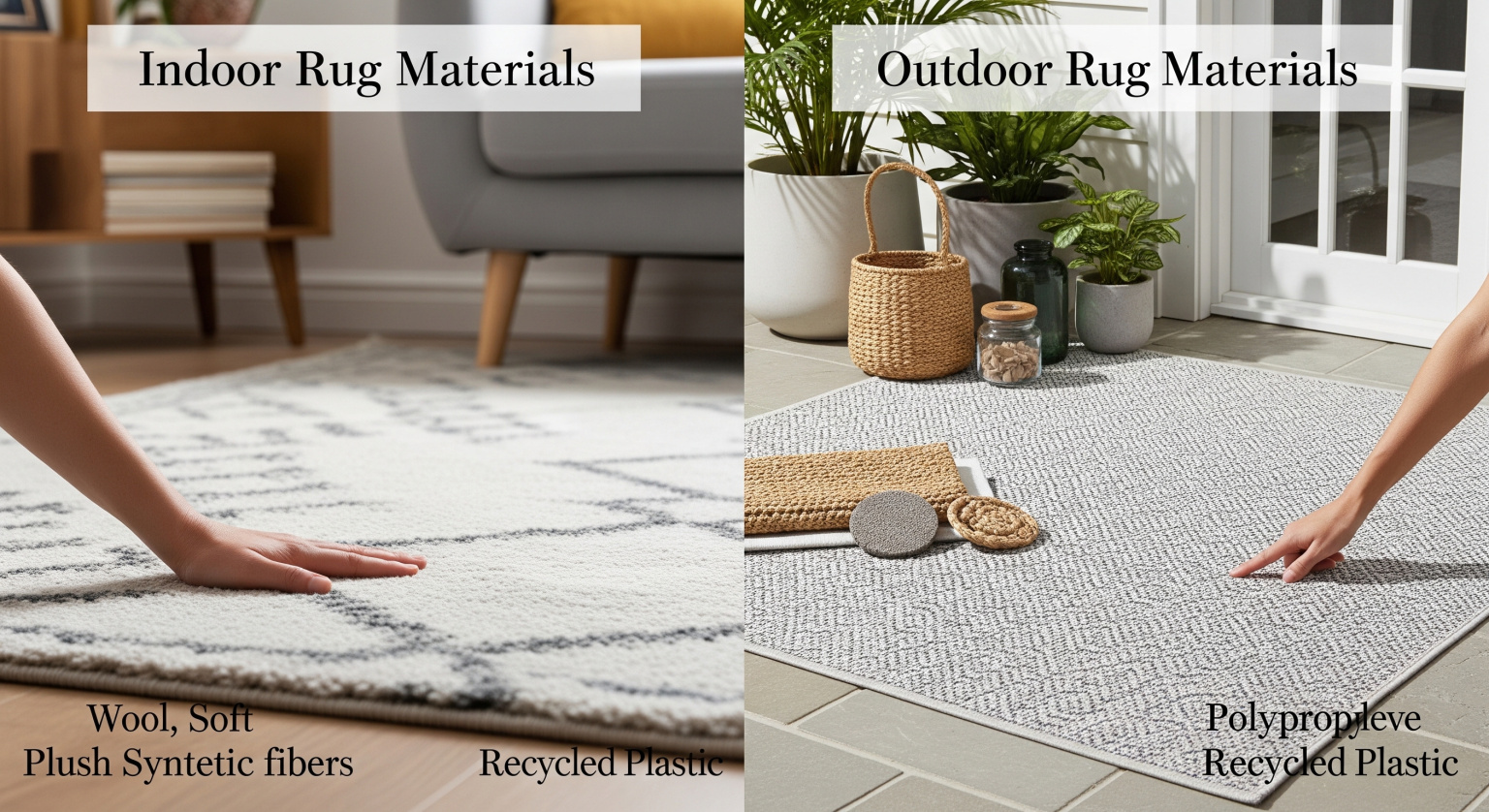
Construction techniques further reinforce this divide. Indoor rugs may be hand-knotted, tufted, or woven using methods that emphasize craftsmanship and detail. Outdoor rugs are more often machine-made, prioritizing consistency, strength, and cost-effective durability. While this does not mean outdoor rugs lack style, it does mean their construction is optimized for resilience rather than luxury. Understanding this distinction helps explain why an indoor rug used outdoors often deteriorates quickly, while an outdoor rug indoors may feel less plush.
Durability, Maintenance, and Performance Over Time
Durability is where the practical differences between indoor and outdoor rugs become most apparent. Indoor rugs are designed for controlled environments where spills are occasional and dirt is managed through regular vacuuming. Over time, they develop a patina that many people find appealing, especially in wool rugs that soften and age gracefully. However, when exposed to excessive moisture or harsh sunlight, these rugs can warp, fade, or develop odors that are difficult to remove.
Outdoor rugs are built with a much higher tolerance for wear and environmental stress. They are meant to handle frequent foot traffic, tracked-in dirt, and fluctuating weather without losing structural integrity. Cleaning routines are also different; outdoor rugs can often be hosed down, scrubbed with mild soap, and left to air dry without damage. This ease of maintenance makes them particularly attractive for busy households, pet owners, and transitional spaces like entryways or kitchens.
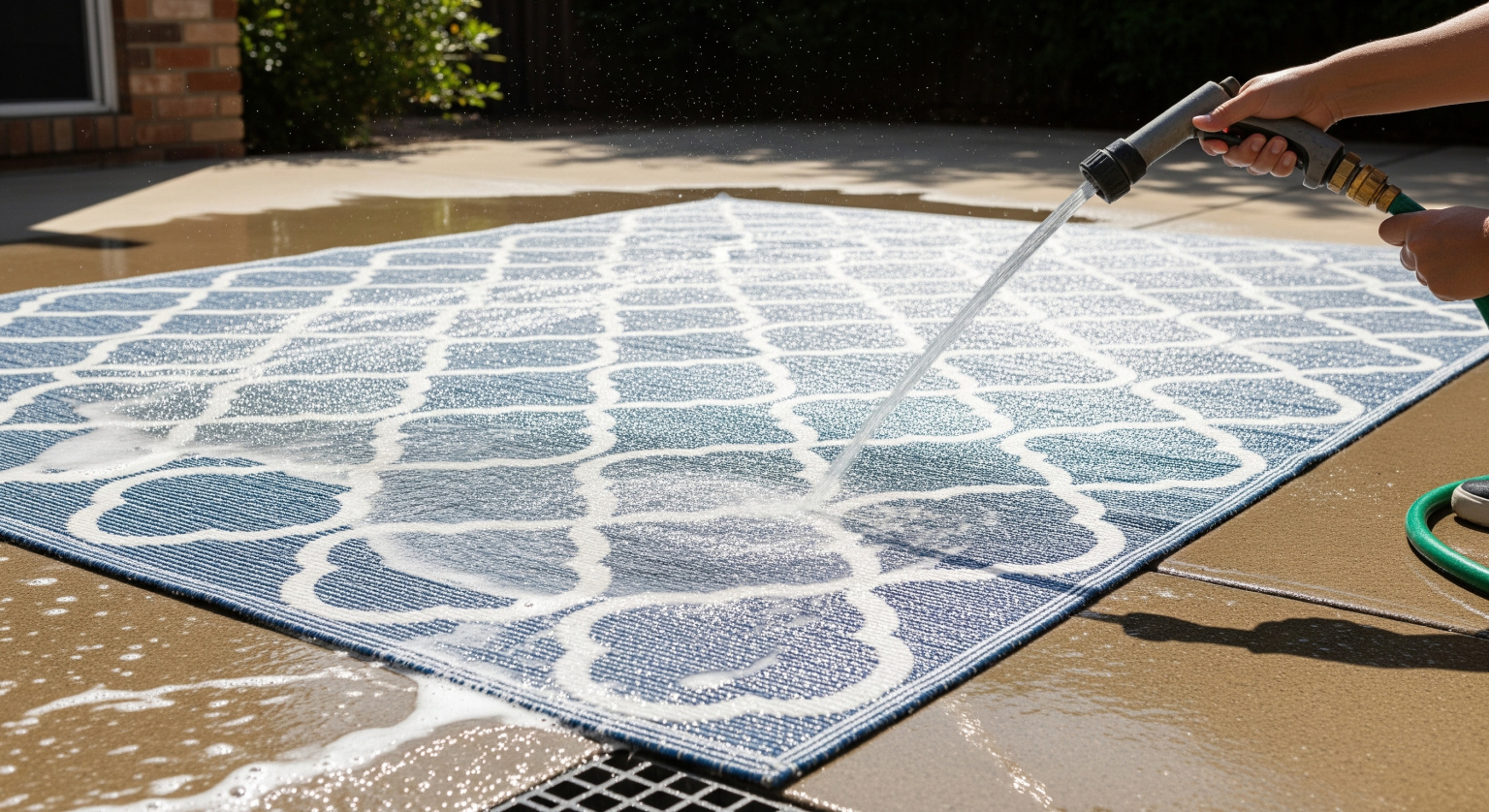
Performance over time is not only about how long a rug lasts, but how well it maintains its appearance. Indoor rugs may show wear patterns in high-traffic areas, while outdoor rugs are designed to hide dirt and resist crushing. That said, outdoor rugs may feel stiffer underfoot and offer less insulation against cold floors. Choosing between the two involves weighing comfort against resilience, and understanding how the rug will be used on a daily basis.
Comfort, Aesthetics, and Design Flexibility
From a design perspective, indoor rugs offer greater variety in texture, pattern complexity, and color depth. Natural fibers absorb dyes differently, creating nuanced tones and intricate designs that are difficult to replicate in outdoor materials. This makes indoor rugs ideal for spaces where visual richness and tactile comfort are priorities, such as living rooms, bedrooms, and formal dining areas. They also contribute to sound absorption and warmth, enhancing the overall sensory experience of a room.
Outdoor rugs have traditionally been more limited in design, but this gap has narrowed significantly in recent years. Advances in synthetic fibers and printing techniques now allow outdoor rugs to mimic the look of natural materials while retaining their performance benefits. They tend to favor bold patterns, geometric designs, and neutral palettes that can withstand fading. While they may not offer the same softness as a high-pile wool rug, their versatility makes them suitable for a wide range of spaces.
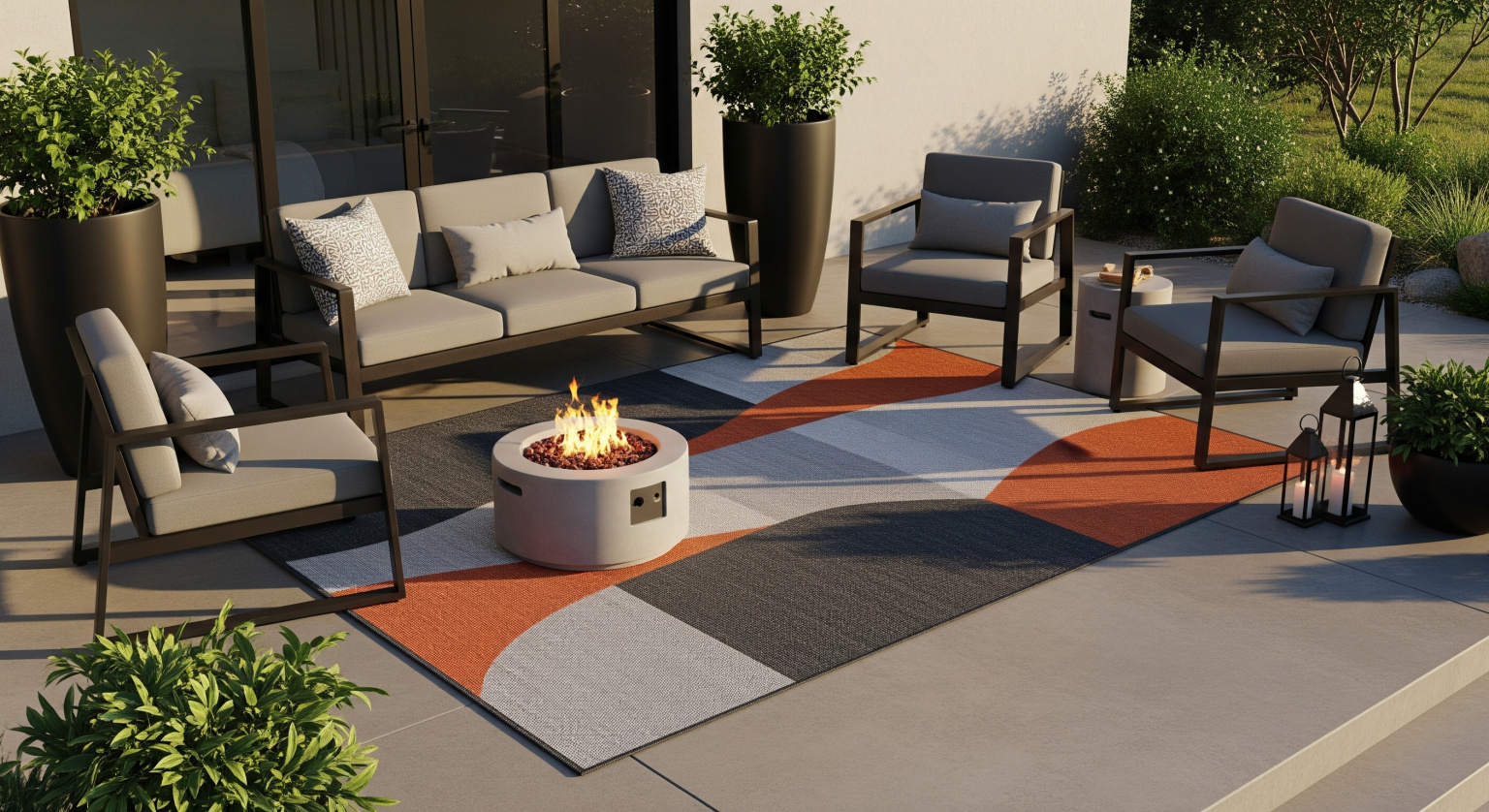
Design flexibility is where many homeowners blur the line between indoor and outdoor rugs. Using outdoor rugs indoors has become increasingly popular, particularly in areas prone to spills or heavy traffic. Kitchens, children’s rooms, and casual dining spaces benefit from the durability of outdoor rugs without sacrificing style. Conversely, using indoor rugs outdoors is generally discouraged unless the space is fully enclosed and protected from moisture and sunlight.
Choosing the Right Rug for Each Space
Selecting between indoor and outdoor rugs ultimately comes down to understanding the conditions of the space and the expectations placed on the rug. Indoor rugs are best suited for climate-controlled areas where comfort, warmth, and visual sophistication matter most. They reward careful maintenance with longevity and beauty, becoming integral elements of a home’s design language. When chosen thoughtfully, they elevate a space and create a sense of cohesion among furnishings.
Outdoor rugs excel in environments where durability and ease of care are essential. Patios, balconies, terraces, and garden seating areas benefit from rugs that can withstand the elements while defining zones and adding comfort. They are also a practical solution for indoor spaces that function more like transitional areas, such as mudrooms or open-plan living spaces that connect directly to the outdoors. For homeowners seeking reliable options, exploring curated collections of outdoor rugs can provide insight into styles designed for long-term performance.
There is also a growing category of hybrid usage, where outdoor rugs are intentionally brought indoors for their practicality. This approach works well in contemporary homes that value flexibility and low maintenance. At the same time, investing in quality indoor rugs remains essential for spaces where comfort and craftsmanship are non-negotiable. The key is not to treat rugs as interchangeable décor items, but as functional design tools with specific strengths.
Understanding the difference between indoor and outdoor rugs empowers better design decisions and prevents costly mistakes. Each type serves a distinct purpose, shaped by materials, construction, and intended use. When matched correctly to their environment, rugs enhance both the beauty and usability of a space. Rather than asking which rug looks best, the more meaningful question is which rug will perform best where it is placed.