
What Is an Oushak Rug?
An Oushak rug is less a decorative accessory and more a quiet architectural element that settles into a space and reshapes how it feels to live there. Originating in western Anatolia, these rugs were never meant to perform visually in the loud, immediate way many decorative objects do. Instead, they operate through atmosphere, proportion, and time. An Oushak rug reveals itself gradually, through morning light, evening shadows, and years of daily use. In contemporary interiors, it is chosen not to impress but to endure.
There is a particular calm that an Oushak rug brings into a room, one that is difficult to replicate with newer or more graphic designs. Its patterns are expansive rather than dense, allowing air and light to move across the surface. The rug does not interrupt the room; it completes it. This quality makes Oushak rugs especially valued in homes where balance matters more than statement. They anchor a space emotionally as much as visually, offering a sense of grounding that feels instinctive rather than styled.
A Rug Shaped by Place and Tradition
The story of the Oushak rug begins in a region defined by open landscapes, generous horizons, and soft Mediterranean light. These environmental influences shaped not only the materials but also the visual language of the rugs themselves. Wool was spun with an emphasis on warmth and flexibility, creating a pile that feels welcoming underfoot rather than overly refined. The weaving techniques favored durability and comfort over excessive intricacy. From the beginning, these rugs were made to be lived with.
Historically, Oushak rugs were produced for large interiors such as palaces, mosques, and reception halls, spaces where proportion mattered more than precision. This explains the generous scale of their motifs and the sense of visual openness they convey. When translated into modern homes, that same sense of scale brings ease rather than overwhelm. Even in smaller rooms, an Oushak rug rarely feels crowded. Instead, it creates a visual horizon that steadies the room.
Color That Ages Gracefully
One of the defining characteristics of an Oushak rug is its color palette, which is often misunderstood as faded or understated. In reality, these hues are intentionally restrained. Traditional dyes derived from plants and minerals produced tones that were never harsh to begin with. Soft terracotta, pale gold, washed indigo, and silvery sage dominate the palette, creating surfaces that interact gently with light. Over time, these colors mellow further, developing a patina that feels organic rather than worn.
In daily life, this means an Oushak rug behaves almost like a natural material rather than a static object. Morning sunlight may draw warmth from its reds, while evening light cools the blues and greys. This responsiveness allows the rug to adapt effortlessly to changing interiors. Walls can be repainted, furniture replaced, art rotated, and the rug remains relevant. It does not compete with its surroundings; it harmonizes them.
Pattern Without Visual Noise
The patterns found in Oushak rugs are classical, yet they resist rigidity. Medallions, florals, and abstract botanical forms appear softened, almost as if seen through time rather than drawn with precision. Lines are rarely sharp, and symmetry is often relaxed. This looseness gives the rug a sense of movement and warmth, preventing it from feeling static or overly formal. It is a pattern language that feels human rather than mechanical.
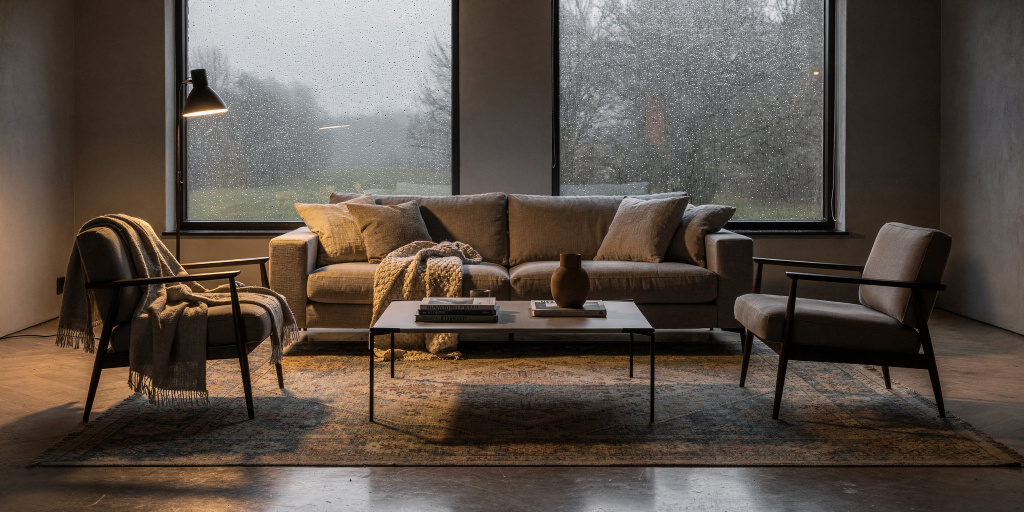
This restraint is precisely what allows Oushak rugs to work so well in layered interiors. In rooms where contemporary furniture sits alongside vintage pieces, the rug acts as a visual mediator. It absorbs contrast rather than amplifying it. This makes it particularly valuable in homes that evolve gradually, where pieces are collected over time rather than purchased all at once. An Oushak rug accommodates that evolution with quiet confidence.
Craft That Prioritizes Longevity
Behind the softness of an Oushak rug lies a tradition of meticulous hand-knotting. These rugs are made using time-intensive techniques that favor strength and flexibility over tight, rigid density. The knots are firm but not compressed, resulting in a surface that feels both substantial and forgiving. This balance allows the rug to withstand years of use without becoming brittle or thin. It is craftsmanship designed for longevity rather than display.
This approach places Oushak rugs firmly within the tradition of hand-knotted rugs, where time, skill, and material quality define value. Small variations in knotting and color are not flaws but signatures of the human hand. They give each rug a distinct character that cannot be replicated by machines. In an era of mass production, this authenticity carries a quiet, enduring luxury.
How Oushak Rugs Function in Modern Interiors
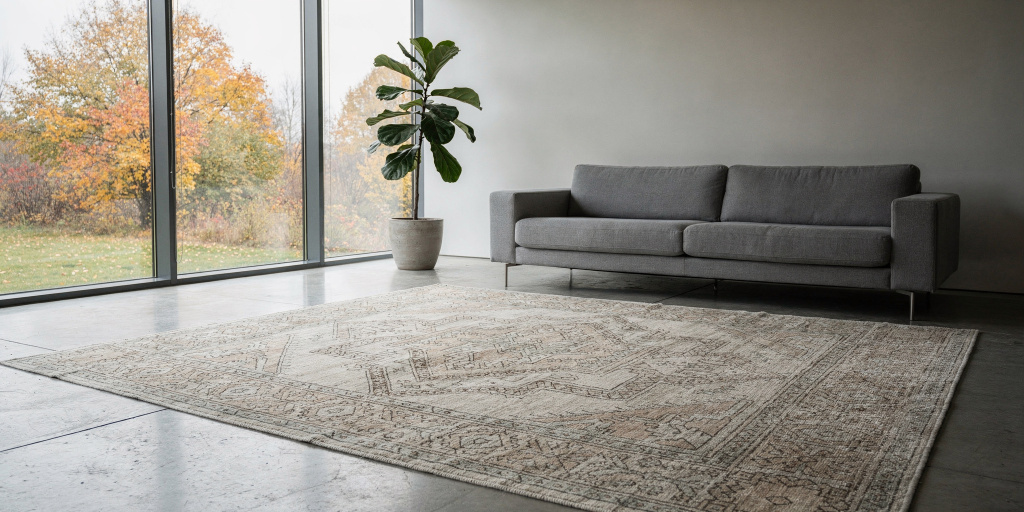
In contemporary homes, Oushak rugs are often chosen as a counterbalance to clean architectural lines and minimal palettes. They soften spaces dominated by stone, concrete, or metal without introducing visual clutter. A modern sofa gains warmth, a dining table feels more grounded, and circulation through the room becomes more fluid. The rug does not impose a style; it supports one.
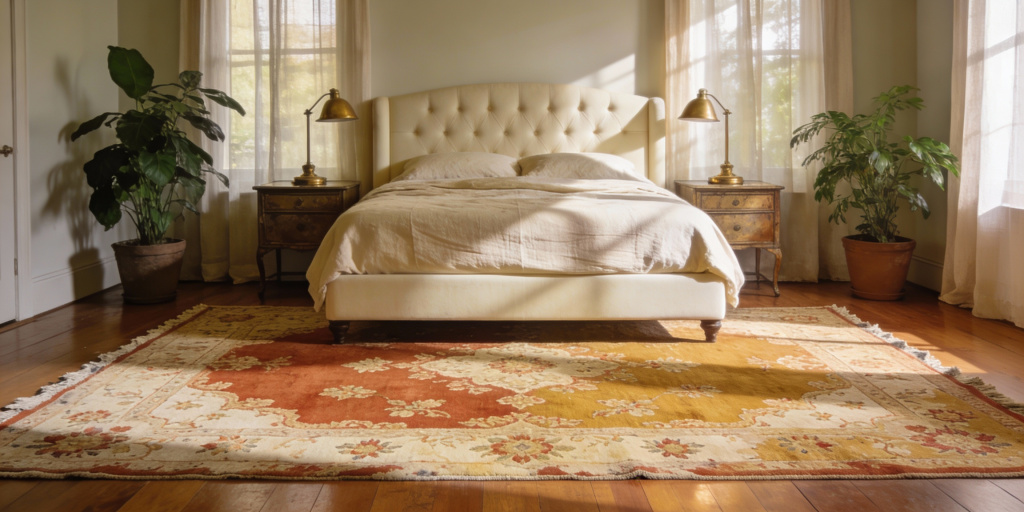
Bedrooms benefit particularly from the presence of an Oushak rug. Placed beneath the bed, it creates a sense of ease that extends beyond aesthetics. The texture absorbs sound, softens movement, and makes the space feel complete. Unlike trend-driven bedroom rugs, an Oushak does not dictate mood. It provides a quiet foundation that supports rest and daily ritual.
Its Place Within the Rug Tradition
Oushak rugs belong to a wider family of oriental rugs, yet they occupy a distinct position within that lineage. Historically prized in Europe from the Renaissance onward, they appeared in paintings as markers of refinement and cultural exchange. Unlike highly intricate court rugs, however, Oushaks maintained an accessible elegance. They were luxurious without being precious, intended for real spaces rather than ceremonial ones.
Within the context of Turkish rugs, Oushaks stand out for their softness and openness. Where other regional styles emphasize bold geometry or dense ornamentation, Oushaks prioritize balance and restraint. This makes them especially appealing to contemporary sensibilities that value calm over complexity. They feel timeless not because they resist change, but because they accommodate it.
Why Oushak Rugs Continue to Matter
The lasting relevance of the Oushak rug lies in its emotional intelligence. It understands how spaces are used, how light changes, and how people move through their homes over time. It welcomes wear rather than fearing it, becoming more beautiful as it settles into daily life. This quality makes it an antidote to disposable design, offering something that grows richer rather than obsolete.
Choosing an Oushak rug is an act of long-term thinking. It is a decision to invest in atmosphere rather than trend, in comfort rather than spectacle. Whether placed in a contemporary apartment or a traditional villa, it brings continuity and quiet confidence. An Oushak rug does not ask to be noticed. It simply stays, doing its work year after year, shaping the feeling of home in ways that are subtle but profound.