
What Is a Low-Pile Rugs?
In interiors shaped by intention rather than excess, the low-pile rug occupies a quietly decisive role. It does not announce itself, nor does it retreat into invisibility; instead, it calibrates the room with precision. Its surface holds tension between softness and discipline, offering comfort without indulgence. For designers and collectors attuned to nuance, low pile represents a form of visual restraint that allows architecture, furniture, and light to speak with greater clarity. The rug becomes less an accessory and more a grounding plane, steadying the composition of the space.
Low-pile rugs have long been favored in environments where movement, proportion, and continuity matter as much as texture. Their reduced height creates a seamless dialogue with floors, avoiding abrupt transitions or visual interruption. In a room defined by long sightlines and carefully considered materials, this subtlety is essential. The eye travels uninterrupted, registering the rug as a field rather than an object. Such surfaces encourage a sense of calm, allowing the room to breathe without relinquishing warmth.
Surface as Architecture
In refined interiors, a low-pile rug functions almost architecturally, extending the logic of the floor rather than sitting atop it. Its thin profile aligns naturally with stone, timber, or concrete, reinforcing the geometry of the space. Designers often gravitate toward this quality when seeking coherence across open-plan environments. The rug supports circulation instead of competing with it, enabling furniture to settle naturally without visual friction. This is why collections such as carefully crafted thin rugs often appear in residences where spatial clarity is paramount.
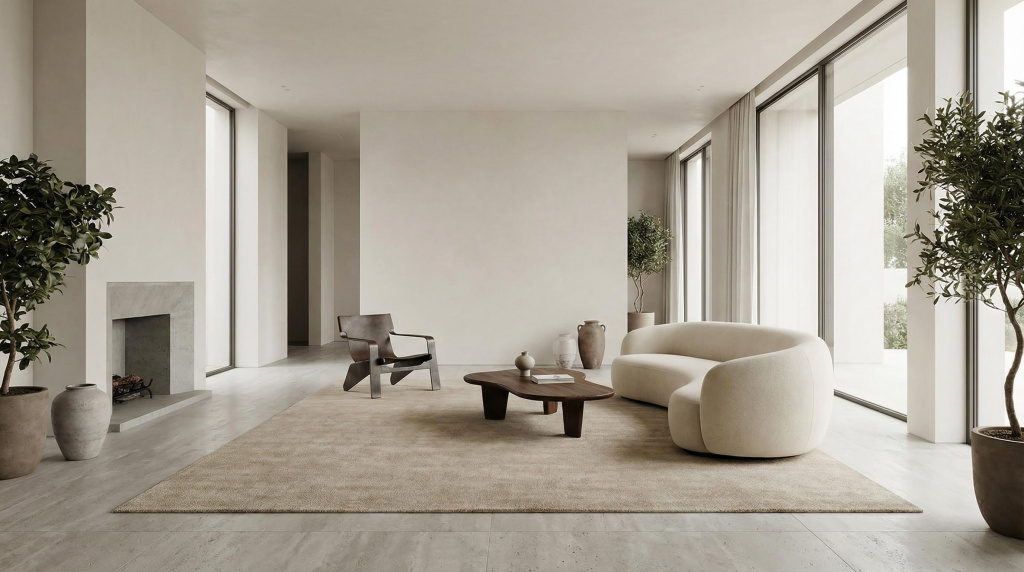
The material intelligence of low pile reveals itself most clearly in the way it interacts with light. Without deep fibers to scatter shadows, the surface reflects illumination evenly, accentuating weave, color variation, and craftsmanship. Subtle shifts in tone become more legible as daylight moves across the room. In the evening, artificial light skims the surface, emphasizing texture without drama. This controlled response to light is part of what gives low-pile rugs their composed, enduring presence.
Unlike more voluminous rugs, low pile invites closer inspection. The handwoven structure, knot density, and fiber selection are immediately apparent, rewarding a slower, more attentive gaze. Wool, silk, and blended fibers behave differently at this height, each bringing its own tactility and luster. The absence of excessive pile height leaves little room for concealment, making quality and craftsmanship non-negotiable. For this reason, design-led homeowners often see low pile as an honest expression of material and maker.
Restraint, Texture, and Precision
Luxury, when articulated through restraint, relies heavily on precision of detail. Low-pile rugs exemplify this philosophy through controlled texture and disciplined color palettes. Patterns, if present, tend to be tonal and measured, designed to reveal themselves gradually. The rug supports the room’s narrative rather than dominating it, allowing other elements to carry visual weight. This balance explains the enduring appeal of refined flat pile rugs in contemporary and modernist interiors.
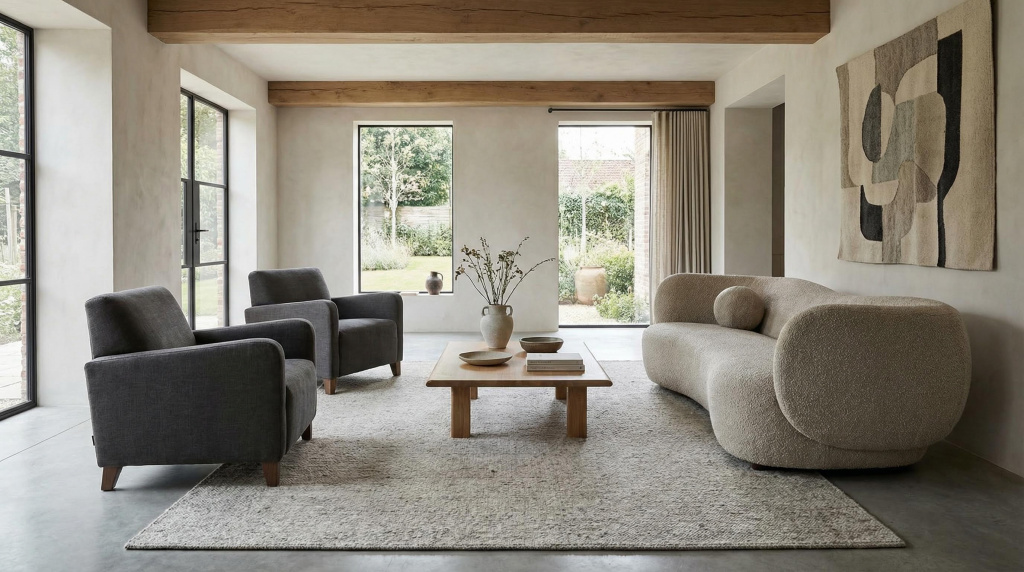
Texture in low pile is rarely about plushness; instead, it is about tactility and rhythm. The surface responds to touch with a subtle resistance, reminding the hand of the rug’s density and construction. This quality aligns naturally with spaces that privilege craftsmanship over comfort clichés. In rooms furnished with tailored upholstery, stone tables, or sculptural seating, a low-pile rug provides equilibrium. It tempers hardness without softening the room’s intent.
Precision also manifests in proportion. Because low-pile rugs sit closer to the floor, their dimensions read more exactly within a space. A rug that is slightly undersized or misaligned becomes immediately apparent, which is why designers approach placement with care. When proportion is correct, the effect is quietly transformative. Furniture appears more grounded, circulation feels intuitive, and the room gains a sense of composure that is difficult to articulate but immediately felt.
Aging, Patina, and Everyday Ritual
One of the most compelling qualities of low-pile rugs is the way they age. Rather than compressing or matting unevenly, the surface evolves with a gentle patina. High-traffic areas develop a soft sheen, evidence of use rather than wear. This gradual transformation aligns with interiors designed to mature over time rather than remain static. The rug becomes a record of daily life, absorbing movement and memory with quiet grace.
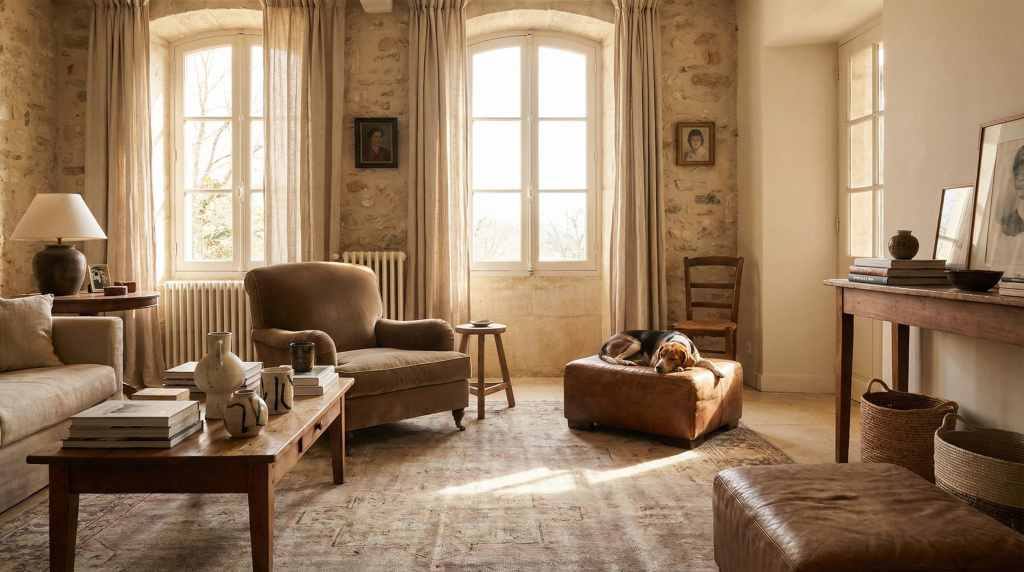
Because low-pile rugs integrate so seamlessly into daily routines, they often become part of unspoken rituals. Walking barefoot across a cool, tightly woven surface in the morning offers a different sensation than stepping into plush pile. Chairs glide more easily, doors open without obstruction, and the room responds fluidly to activity. These small interactions accumulate, shaping how the space is experienced over years. In this sense, the rug participates in the rhythm of life rather than interrupting it.
Materials such as felted wool introduce another layer of subtlety to this aging process. Felted rugs with low pile develop a dense, cohesive surface that softens visually without losing structure. The fibers compact evenly, creating a refined patina that feels intentional. This quality appeals to those who value longevity over novelty. The rug does not demand attention, yet it rewards those who notice how it changes.
Appeal to Collectors and Design-Led Homes
Low-pile rugs hold particular appeal for collectors and architects who approach interiors as curated environments. Their understated presence allows rare furniture, art, and architectural details to remain focal points. At the same time, the rug provides a unifying element that anchors the composition. This balance is especially evident in pieces by ateliers such as Jan Kath, where technical mastery and artistic restraint coexist. The rug becomes part of a larger cultural and design conversation.
For design-led homeowners, choosing low pile is often an expression of confidence. It signals an understanding that luxury does not require overt softness or visual excess. Instead, it lies in proportion, material honesty, and the ability to live well with objects over time. The rug supports this philosophy by remaining adaptable as furnishings evolve. It is a constant that accommodates change without losing relevance.
Ultimately, the low-pile rug resists easy definition because its value is experiential rather than descriptive. It is felt in the way a room flows, how light settles, and how daily movement unfolds. By embracing restraint and precision, it elevates the interior without imposing itself. This is why low pile continues to resonate in spaces shaped by discernment and long-term vision. In such environments, quiet sophistication speaks louder than ornament ever could.