
How to Store Outdoor Rugs for Winter
Outdoor rugs are designed to live with the elements, but winter introduces a different kind of stress that even the toughest weaves should not endure unnecessarily. Snow, prolonged moisture, freezing temperatures, and trapped debris can quietly shorten the life of a rug if it is left exposed or stored carelessly. Proper winter storage is less about packing something away and more about preserving color, structure, and cleanliness so the rug feels refreshed when spring returns. Treating storage as part of regular rug care allows you to protect your investment while maintaining the visual continuity of your outdoor spaces year after year. When done correctly, storing an outdoor rug becomes a simple seasonal ritual rather than a chore.
Before considering where or how to store an outdoor rug, it helps to understand why winter storage matters in the first place. Cold weather can stiffen synthetic fibers and weaken natural ones, especially when moisture is involved. Even rugs marketed as weather-resistant can develop mildew, odor, or backing deterioration if frozen repeatedly while damp. Dirt and organic debris trapped during storage can grind into fibers over months, dulling texture and appearance. A thoughtful approach ensures that your rug remains as functional and attractive as the day it was rolled out.
Clean and Dry Thoroughly Before Storage
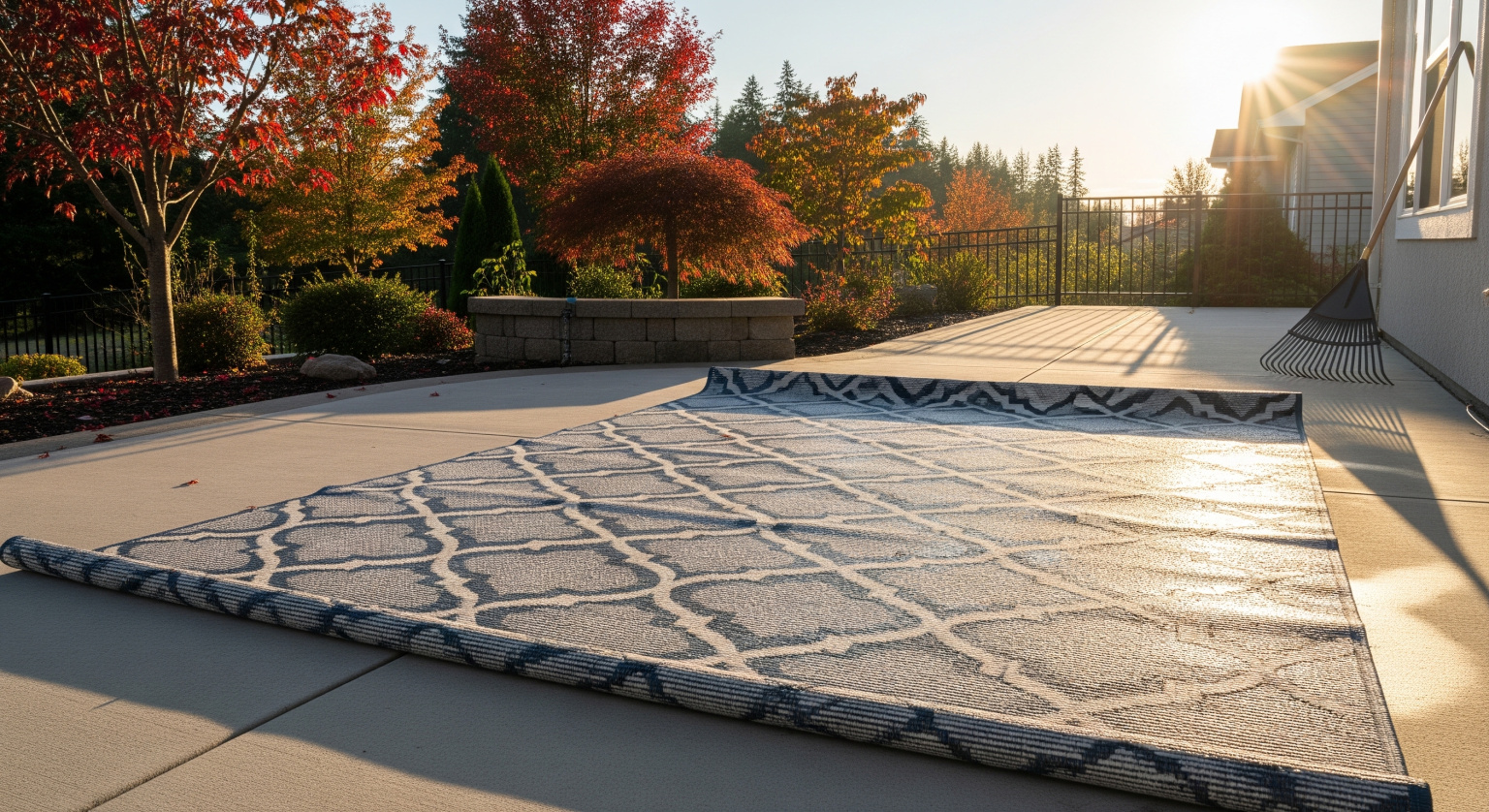
The most critical step in storing outdoor rugs for winter is cleaning them completely before they are put away. Leaving dirt, leaves, pollen, or moisture in the fibers invites mold growth and discoloration during long-term storage. Start by shaking or vacuuming both sides to remove loose debris, then wash the rug according to its material requirements. Many outdoor rugs can be gently scrubbed with mild soap and water, but always allow the rug to dry fully in open air before proceeding. Even slight dampness trapped during storage can cause odors that are difficult to remove later.
Drying deserves more patience than most homeowners expect, especially in cooler weather. Lay the rug flat or drape it over a railing in a well-ventilated area, rotating it occasionally so both sides dry evenly. Avoid folding or stacking while damp, as this creates moisture pockets that compromise fibers. Sunlight can help speed drying but should be balanced to prevent fading, particularly for darker colors. A completely dry rug is the foundation of safe winter storage and should never be rushed.
Choose the Right Folding or Rolling Method
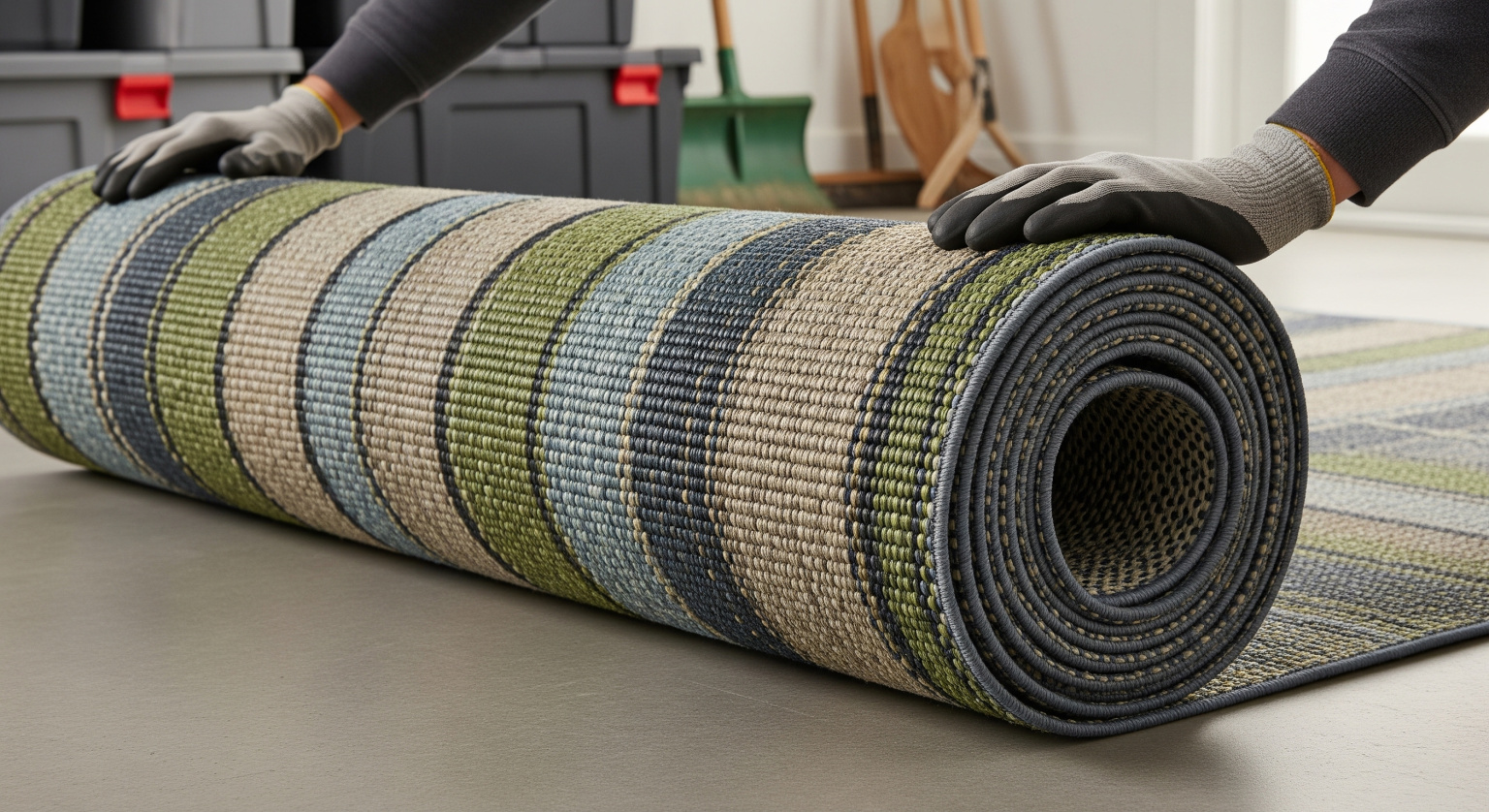
How an outdoor rug is folded or rolled during storage directly affects its shape and lifespan. Rolling is almost always preferable to folding, as it prevents hard creases that can become permanent over time. Roll the rug with the pile facing inward to protect the surface from dust and friction. For larger pieces, rolling also makes handling easier and reduces stress on the backing. Securing the roll loosely with cotton ties or breathable fabric strips keeps it stable without compressing fibers.
If rolling is not possible due to space constraints, folding should be done carefully and temporarily. Avoid sharp folds and alternate fold directions to minimize pressure points. Place acid-free paper or clean fabric between layers to reduce friction and prevent color transfer. Never use plastic wrap directly against the rug surface, as it traps moisture and restricts airflow. The goal is to store the rug in a way that allows it to breathe while maintaining its natural shape.
Select a Storage Environment That Protects, Not Suffocates
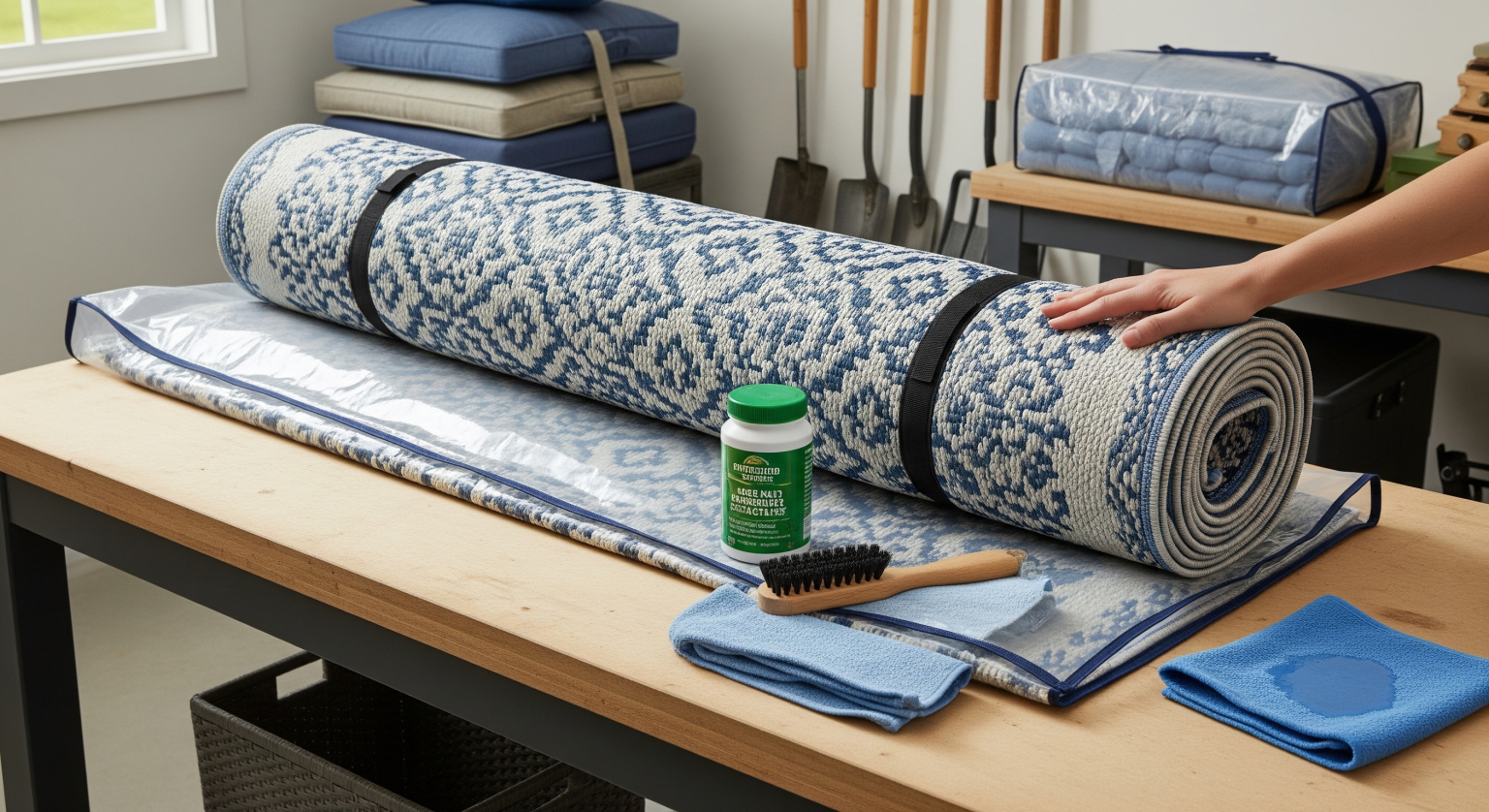
The location you choose for winter storage matters as much as how the rug is prepared. Ideal storage spaces are dry, cool, and well-ventilated, such as a climate-stable garage, storage room, or interior closet. Avoid basements that experience humidity fluctuations or sheds that are exposed to temperature extremes. Elevating the rug off the floor using shelving or pallets prevents accidental water exposure and discourages pests. Consistent conditions help fibers rest rather than react to environmental stress.
Protective covers should be breathable rather than airtight, allowing air circulation while keeping dust away. Cotton sheets, canvas covers, or specially designed rug storage bags are excellent options. Avoid sealing rugs in plastic containers or vacuum bags, which can trap moisture and cause fiber deformation over time. If moths or insects are a concern, natural repellents such as cedar blocks can be used nearby without direct contact. Storage should feel protective but never restrictive.
Special Considerations for Shape, Size, and Placement
Not all outdoor rugs are created equal, and their shape can influence how they should be stored. Round and uniquely shaped rugs require extra attention to ensure they retain their form during months of inactivity. Rolling round rugs carefully from one edge to the other helps maintain symmetry and prevents edge curling. If you own decorative statement pieces, such as those found in round outdoor rug collections, preserving their shape ensures they return to your space looking intentional rather than distorted. Shape-conscious storage protects design integrity as much as material quality.
Larger outdoor rugs, particularly those used under dining sets or sectional seating, benefit from being stored horizontally rather than upright. Vertical storage can cause slumping or uneven pressure along the roll. Labeling stored rugs by location or season makes reinstallation easier when warmer months return. For households with multiple outdoor pieces, keeping an inventory prevents unnecessary unrolling and handling. Thoughtful organization saves time and reduces wear.
Placement during storage also matters when rugs are stored alongside other seasonal items. Avoid stacking heavy objects on top of rolled rugs, as prolonged compression flattens fibers and damages backing. Rugs should be stored alone or with lightweight textiles that do not exert pressure. If space is limited, rotate stored rugs mid-season to redistribute weight evenly. These small adjustments make a noticeable difference in long-term appearance.
When winter ends, the way a rug is reintroduced to your space can extend its lifespan even further. Allow the rug to acclimate gradually by unrolling it indoors before placing it outside. This helps fibers relax and return to their original texture. A light shake or vacuum removes any settled dust from storage. Seasonal care is cyclical, and good storage habits ensure every outdoor rug feels renewed rather than worn.
Outdoor rugs are essential elements of comfortable exterior living, and protecting them during winter is an extension of thoughtful design. Whether your rug anchors a patio, balcony, or garden seating area, proper storage preserves both function and style. Exploring durable designs from curated selections such as outdoor rugs collections becomes more rewarding when you know how to maintain them year after year. Winter storage is not about hiding beauty away, but about safeguarding it until the season is ready again. With the right preparation, your outdoor rugs will return each spring as inviting and expressive as ever.