
How to Choose Entryway Furniture That Sets the Tone for Your Home
The entryway is the first interior space you experience when coming home, yet it is often one of the most overlooked areas in terms of design. More than a simple passage, it acts as a transition between the outside world and the private atmosphere of your home. The furniture you choose for this space shapes not only how it looks, but how smoothly daily routines begin and end. A well-designed entryway reduces clutter, supports practical habits, and quietly communicates the character of the interior beyond it. Choosing entryway furniture is therefore less about filling space and more about creating intention.
Unlike larger rooms, entryways rarely allow for excess, which makes every furniture decision more visible and more consequential. Pieces must earn their place by offering function without overwhelming the space. Proportion, circulation, and material durability become especially important because this area experiences constant use. When entryway furniture is selected thoughtfully, it can elevate the entire home, making even modest interiors feel composed and welcoming. The key is to balance restraint with usefulness, ensuring the space feels complete rather than crowded.
Understand the Architecture and Flow of Your Entryway
Before selecting any furniture, it is essential to understand the physical constraints and movement patterns of your entryway. Measure the available floor area, wall lengths, and door swing clearances to ensure furniture does not interrupt circulation. A narrow corridor requires different solutions than a wide foyer with visual openness. Observing how people naturally move through the space helps determine where storage, seating, or surfaces will feel intuitive rather than obstructive. Entryway furniture should support movement, not compete with it.
Ceiling height and natural light also influence furniture choices more than many homeowners realize. Tall ceilings can accommodate vertical storage or sculptural pieces that draw the eye upward, while lower ceilings benefit from streamlined, horizontal profiles. In darker entryways, lighter finishes or reflective surfaces help prevent the space from feeling enclosed. Furniture should respond to these architectural cues instead of ignoring them. When the scale and orientation align with the space, even simple pieces appear purposeful.
Choose Core Furniture Pieces with Purpose
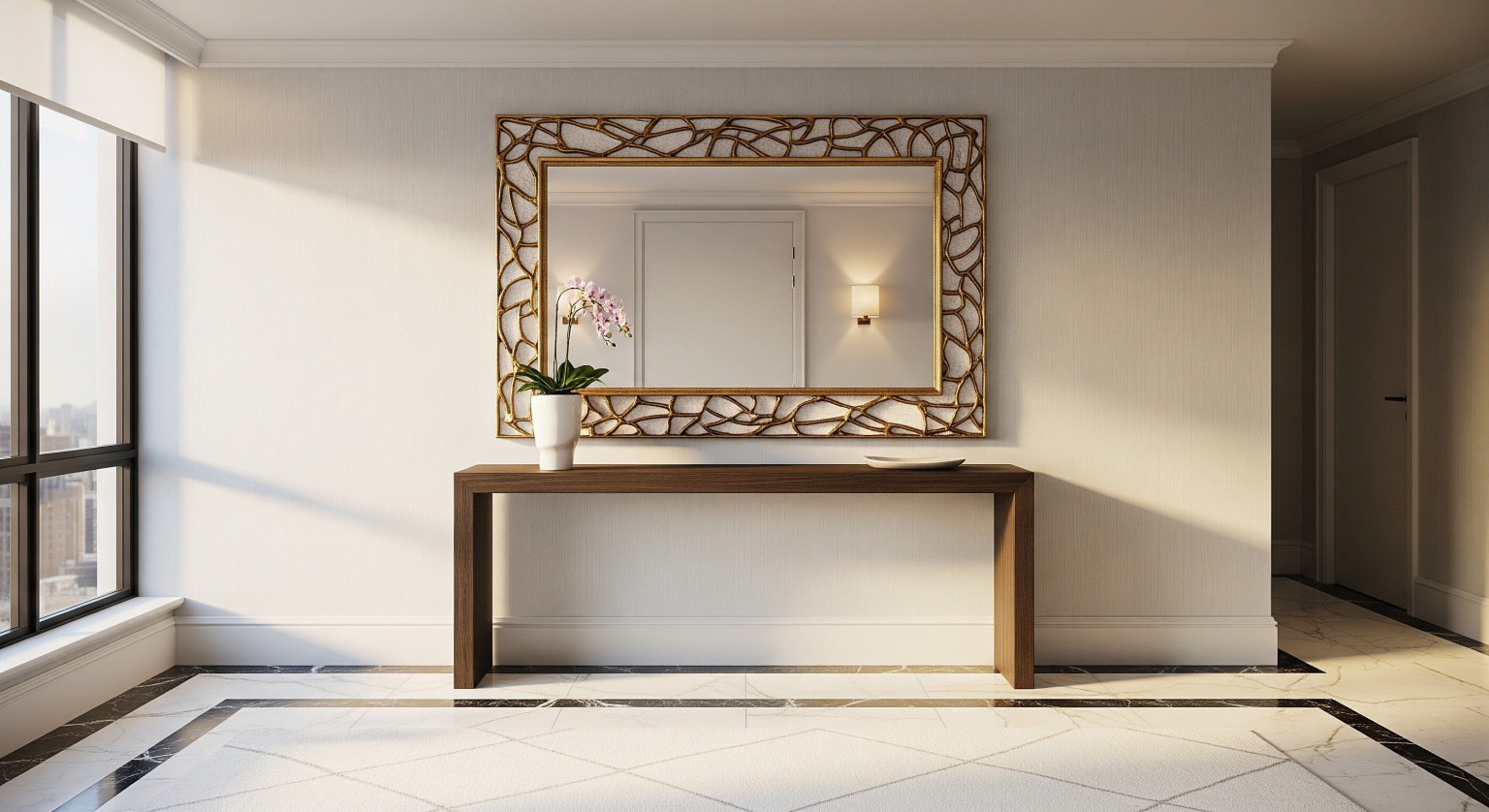
Most entryways benefit from a limited set of foundational furniture pieces rather than an accumulation of small items. A console table often serves as the visual anchor, offering a surface for essentials without dominating the room. Well-proportioned console tables provide a practical landing zone for keys, bags, and decorative objects while maintaining an airy footprint. Selecting a console with storage drawers adds functionality without visual clutter. The goal is to establish order through design rather than relying on accessories.
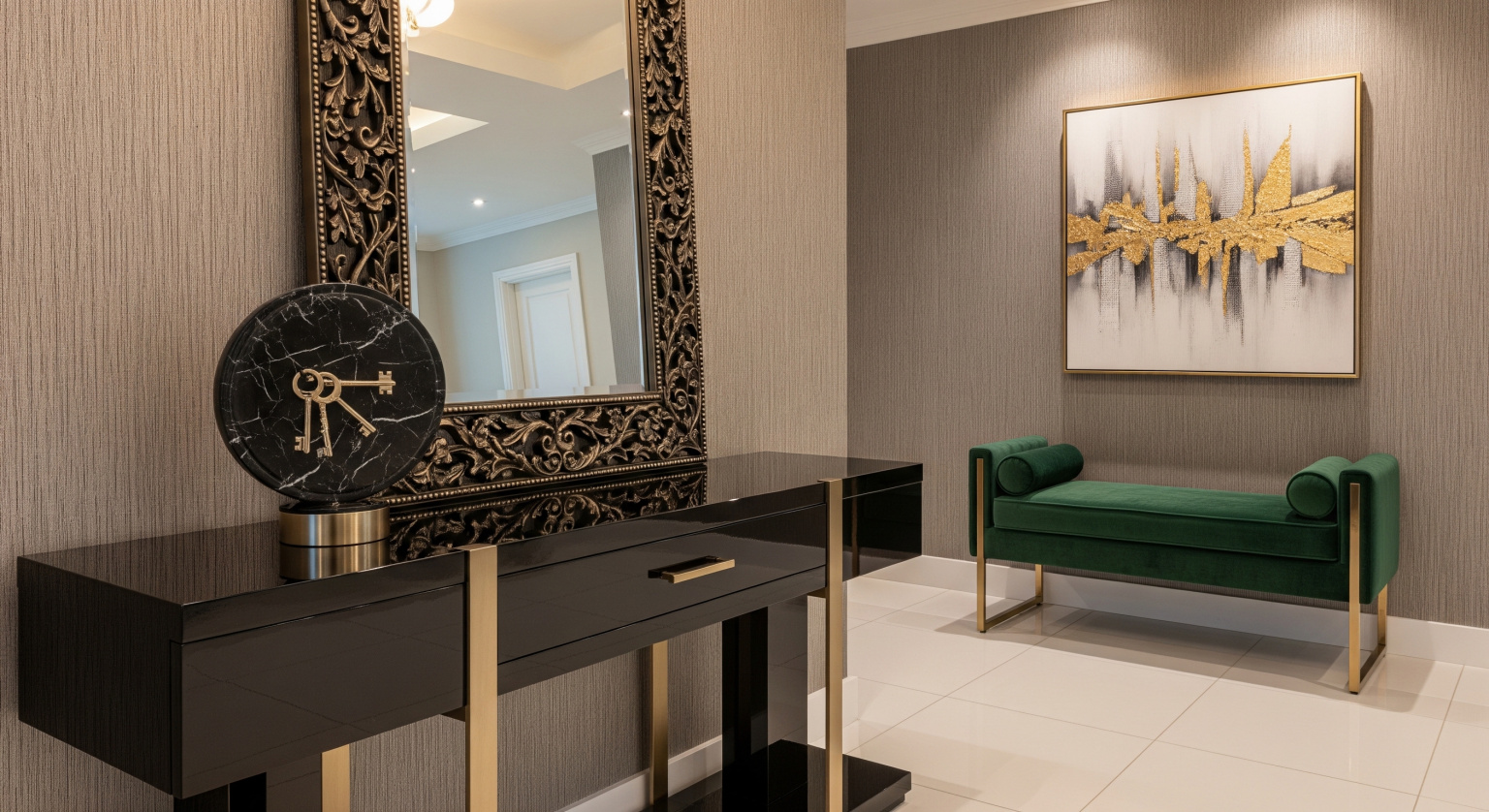
Seating is another valuable element, especially in households where shoes are frequently changed near the door. A bench or slim stool introduces comfort while reinforcing a sense of hospitality. Storage-integrated benches can quietly manage footwear without drawing attention to utilitarian needs. When seating is unnecessary, that space can be repurposed for vertical storage or left intentionally open. Entryway furniture should adapt to how the household actually lives, not how it appears in staged interiors.
Outerwear storage often defines whether an entryway feels calm or chaotic. Freestanding or wall-mounted coat racks and stands allow coats, bags, and scarves to remain accessible without encroaching on walkways. Choosing designs with controlled spacing prevents overcrowding and maintains visual rhythm. Materials such as solid wood or metal offer durability while contributing texture. When coat storage is integrated gracefully, it feels like part of the design rather than an afterthought.
Material, Finish, and Visual Cohesion
Entryway furniture must withstand frequent contact, making material choice particularly important. Durable woods, powder-coated metals, and high-quality laminates resist wear while aging gracefully. Finishes should tolerate moisture, temperature changes, and abrasion without constant maintenance. Matte or textured surfaces tend to conceal fingerprints and scuffs better than high-gloss alternatives. Prioritizing durability ensures that furniture retains its appearance even under daily use.
Visual cohesion matters just as much as material performance. Entryway furniture should feel connected to the broader interior without replicating it exactly. Consistent undertones in wood finishes, metals, or upholstery help create continuity as one moves deeper into the home. Contrast can be introduced through form or texture rather than color alone. When furniture relates harmoniously to surrounding spaces, the entryway feels intentional rather than transitional.
Ground the Space with Texture and Proportion
While furniture provides structure, textiles often supply warmth and balance in an entryway. A well-chosen rug anchors the furniture arrangement and visually defines the space. Durable, low-pile rugs are especially suited to entryways, as they withstand foot traffic while trapping dirt before it enters the home. Scale is critical; a rug that is too small can make even well-chosen furniture feel disconnected. When proportioned correctly, the rug ties the entire composition together.
Texture plays a subtle but influential role in entryway design. Smooth furniture surfaces benefit from the contrast of woven rugs, textured walls, or natural fibers. These layers prevent the space from feeling overly rigid or cold. Thoughtful texture selection also helps balance minimal furniture arrangements, adding depth without visual clutter. In entryways, restraint paired with tactile interest often feels more refined than elaborate decoration.
Lighting and mirrors further enhance the relationship between furniture and space. A mirror placed above a console can amplify light and extend visual depth, particularly in narrow entryways. Lighting fixtures should illuminate key furniture zones without creating glare. When these elements work together, the entryway becomes a cohesive environment rather than a series of isolated pieces. Furniture selection sets the foundation, but proportion and texture complete the experience.
Choosing entryway furniture is ultimately an exercise in thoughtful editing. By responding to architecture, selecting purposeful pieces, and prioritizing durable materials, the space gains clarity and function. Entryways benefit most from restraint, where each item serves both a practical and visual role. When furniture choices are deliberate, the entryway becomes a quiet introduction to the home’s design language. Rather than a forgotten threshold, it becomes a composed and welcoming beginning.